Serving Fayetteville and Nearby Northwest Arkansas Communities
Call or Text (945) 365-7666

Blog
Contact Us
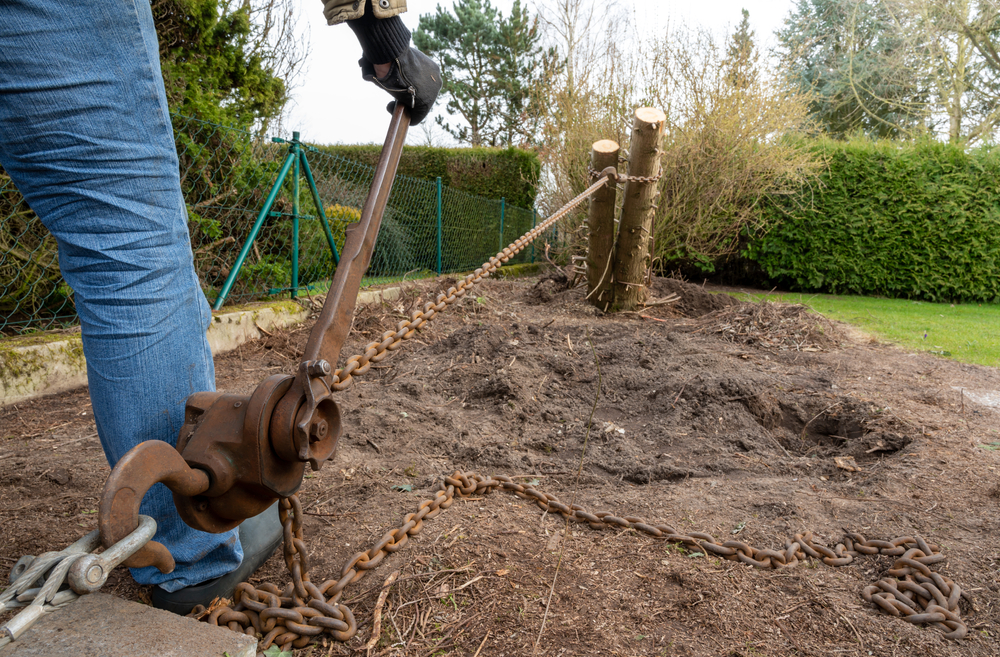
Do You Need to Remove Tree Roots After Stump Grinding?
After a stump is ground down, many homeowners assume the job is only half finished. If the stump is gone, what about the roots underneath?
This is one of the most common questions asked in Fayetteville, Arkansas. Homeowners want to know whether leaving roots underground will cause lawn damage, pest problems, or future structural issues.
The short answer is that in most residential situations, you do not need to remove tree roots after stump grinding. However, there are specific cases where root removal may be necessary. Below is a clear breakdown of how it works.
What Happens to Roots After Stump Grinding?
Stump grinding removes the visible portion of the tree and grinds several inches below ground level. The root system remains underground.
Once the tree is no longer alive, the roots begin a natural decomposition process. In Northwest Arkansas soil conditions, this breakdown happens gradually over several years.
During this time, the roots:
Stop growing
Slowly decay
Lose structural density
Eventually return nutrients to the soil
In most Fayetteville lawns, this process happens without causing major surface issues.
Why Roots Usually Don’t Need to Be Removed
For standard residential properties, removing every root is unnecessary and often impractical.
Full root extraction would require major excavation across large sections of the yard. That level of disturbance typically causes more damage than leaving the roots in place.
In most cases:
Roots decompose naturally
Grass can grow above them
Soil settles gradually
No regrowth occurs if the stump was properly ground
For homeowners focused on lawn restoration, stump grinding alone is sufficient.
Situations Where Root Removal May Be Necessary
While most yards do not require root removal, certain circumstances change the recommendation. Below are the situations where additional action may be needed.
1. Construction Over the Area
If you plan to build directly over the stump location — such as pouring a slab, extending a driveway, or installing structural footings — decomposing roots can cause soil settling.
In these cases, root removal or soil compaction may be recommended.
2. Roots Interfering with Utilities
If large surface roots are entangled with irrigation lines or near underground utilities, selective removal may be necessary.
This is evaluated on a case-by-case basis.
3. Aggressive Tree Species
Some species common in Arkansas may attempt root sprouting even after stump grinding.
If regrowth appears, additional root treatment may be required to prevent new shoots.
4. Severe Surface Root Exposure
If roots extend above ground and interfere with mowing or create tripping hazards, surface-level removal may improve yard usability.
This does not usually require full excavation — only targeted grinding.
Comparing Root Removal vs Natural Decomposition
To understand the impact of each approach, the table below compares full root removal to leaving roots underground after grinding.
For most residential properties in Fayetteville, Arkansas, natural decomposition is the practical option.
What About Lawn Settling?
One concern homeowners in Northwest Arkansas often have is ground settling after roots decay.
As roots break down, small air pockets may form underground. This can lead to minor depressions in the lawn over time.
If settling occurs, the solution is simple:
Add topsoil to the affected area
Reseed or patch grass
Compact lightly to level the surface
This is usually minimal and manageable compared to full excavation.
Do Roots Cause Pest Problems After Grinding?
Roots alone are not typically the main source of termite problems. Above-ground decaying wood poses a greater risk.
Once the stump is removed and ground below grade, the remaining roots are buried underground. In Fayetteville, AR, this significantly reduces the likelihood of attracting pests compared to leaving the stump intact.
Decision Guide: Should You Remove the Roots?
If you’re unsure, use this simple evaluation process.
Step 1: Determine Your End Goal
If you’re restoring lawn space, roots can remain. If you’re building over the area, further removal may be necessary.
Step 2: Inspect for Surface Roots
If roots are exposed above ground, selective grinding may improve lawn usability.
Step 3: Check for Regrowth
If new shoots appear, additional treatment may be required.
Step 4: Evaluate Soil Stability
If you notice significant settling after grinding, topsoil correction is usually sufficient.
For most homeowners in Fayetteville, Arkansas, stump grinding alone resolves the issue without root excavation.
Frequently Asked Questions
Will tree roots keep growing after stump grinding?
No. Once the tree is cut and the stump is ground properly, the roots stop growing.
How long do roots take to decompose?
In Northwest Arkansas soil conditions, decomposition can take several years.
Can roots damage my foundation after grinding?
Dead roots typically shrink and decay rather than expand. They do not continue growing toward structures.
Will grass grow over old roots?
Yes. Grass can grow above decomposing roots with proper soil coverage.
Is full root removal expensive?
Yes. It requires excavation and significantly increases labor costs compared to stump grinding alone.
Conclusion
In most residential yards in Fayetteville, Arkansas, you do not need to remove tree roots after stump grinding. The roots naturally decay underground without causing major lawn problems.
Root removal becomes necessary only when construction, structural compaction, or severe surface interference is involved.
For homeowners throughout Northwest Arkansas looking for efficient stump grinding solutions without unnecessary excavation, Gaskill Stump Grinding provides professional service tailored to local soil and property conditions.

Helpful Links
Business Hours
Mon - Sun: 8:00 am - 8:00 pm
© 2026 All Rights Reserved | Gaskill Stump Grinding